

You can drive a van or camper from Texas to Monterrey and El Potrero Chico. It takes two permits and one insurance policy, and the crossing matters. You need an FMM tourist permit (983 MXN in 2026, about $54 USD) and a Temporary Import Permit (TIP) for the vehicle from Banjercito, because Nuevo León is outside Mexico’s free zone. Your US insurance does not count in Mexico, so buy a Mexican liability policy before you cross. Most overlanders headed to Monterrey use the Colombia Solidarity Bridge northwest of Laredo, which skips Nuevo Laredo and has a Banjercito office on site. Once you’re there, El Potrero Chico is one of the easiest places in northern Mexico to camp in a van. There are three established campgrounds, free camping in the riverbed, and a winter crowd of climbers from all over the world.
Key takeaways
- Permits: FMM for each person, TIP for the vehicle, Mexican auto insurance. All three, every time.
- TIP cost: $45 USD plus tax online or $51 plus tax at the border, plus a refundable deposit of $200 to $400 depending on the vehicle’s model year.
- Get your deposit back: cancel the TIP at a Banjercito office on your way out. If you skip this step, you lose the deposit and can be refused a permit on future trips.
- Crossing: the Colombia Bridge crosses straight into Nuevo León. It avoids Nuevo Laredo and has Banjercito on site. Avoid Reynosa.
- Safety: the US State Department rated Nuevo León Level 2 and Tamaulipas Level 4 in its May 2026 update. Take the toll road and drive in daylight.
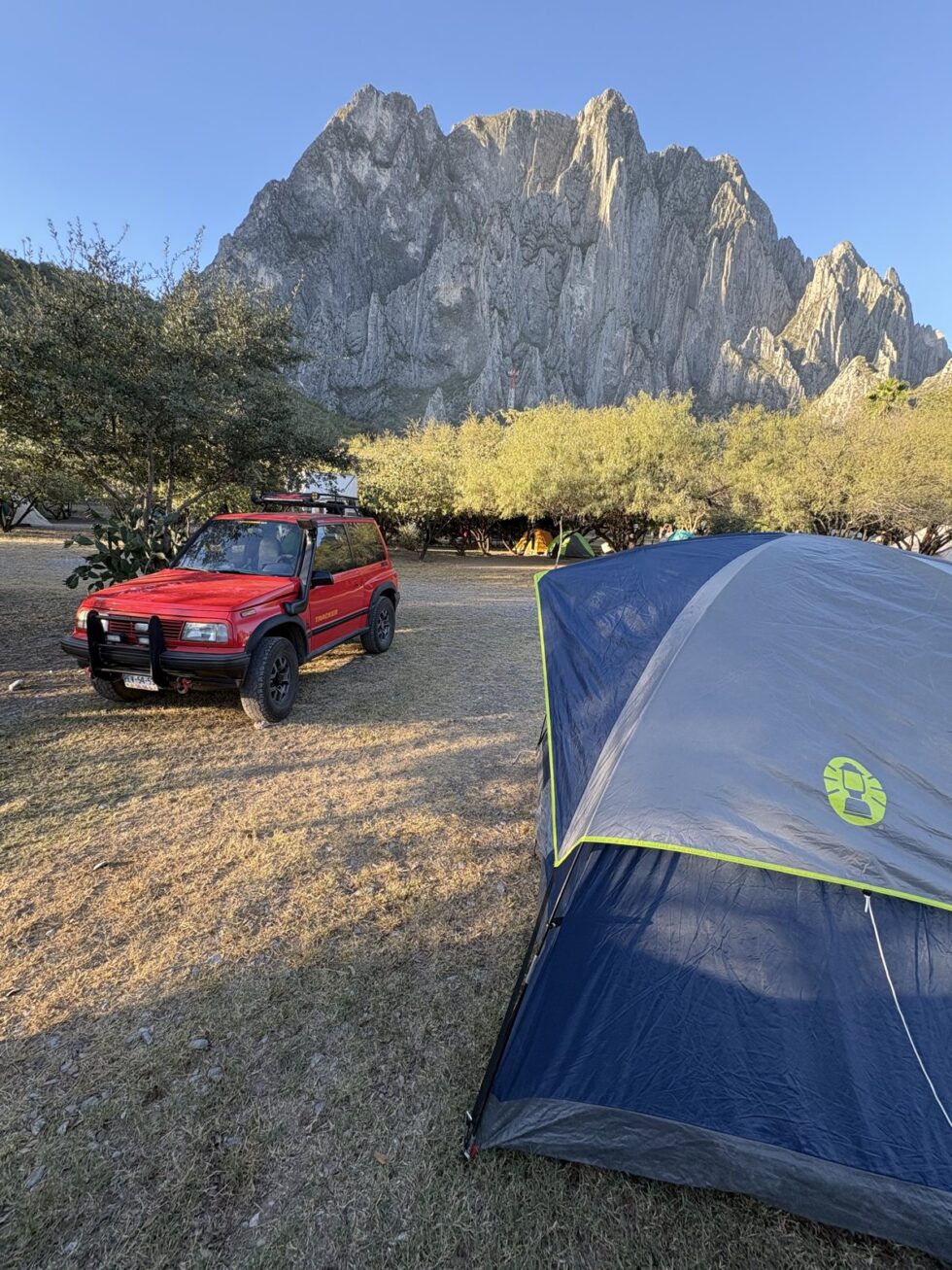
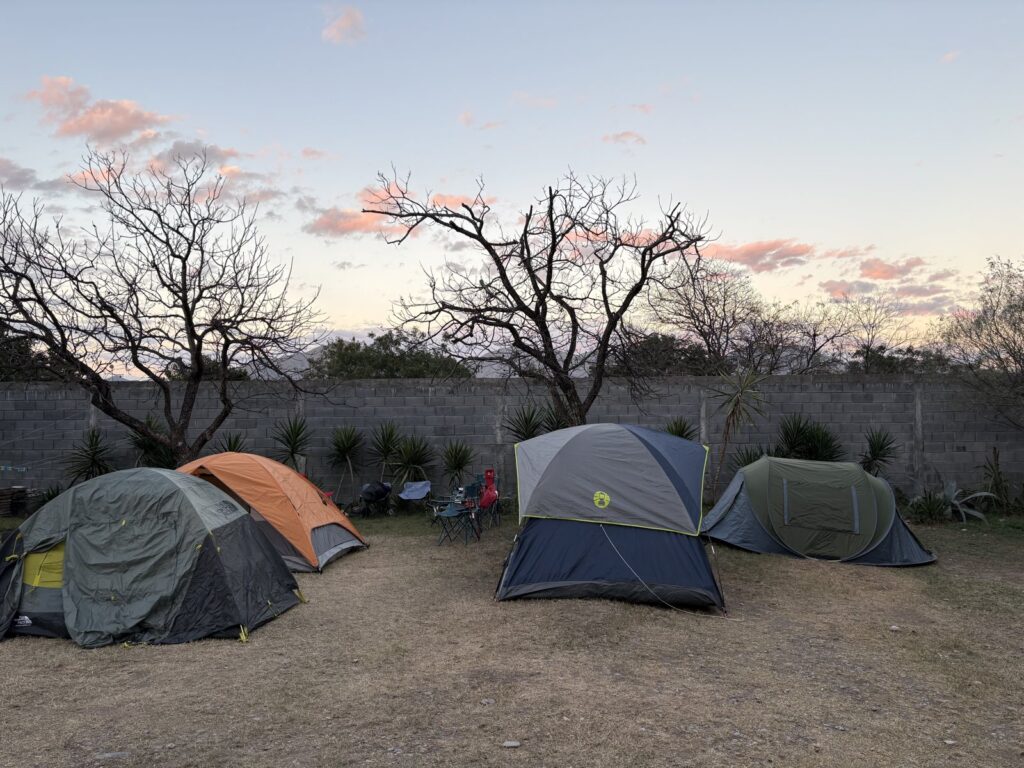
- Potrero Chico camping: La Pagoda, La Posada, and Homero’s, or free in the riverbed or inside the park.
- Monterrey parking: any street with no meter, no yellow curb, and no driveway (cochera). Or a paid lot overnight with a tip for the attendant.
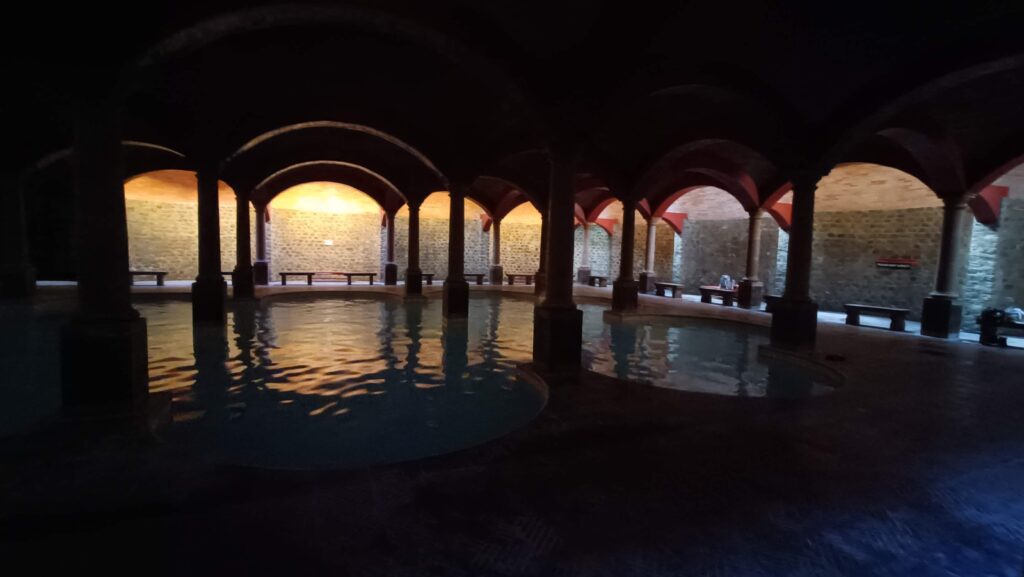
- Hot springs nearby: Termas de San Joaquín (fancier, pricier) and La Azufrosa (simpler, cheaper, camping allowed), about an hour’s drive from Potrero Chico.
What is in this guide
- What paperwork do you need to drive a van into Mexico?
- Which border crossing should you use to get to Monterrey?
- Is it safe to drive a van to Monterrey?
- Do camper vans get targeted for theft?
- Where can you camp at El Potrero Chico?
- Where can you park and sleep in Monterrey?
- Where can you camp in the countryside?
- Can you sleep at a gas station or OXXO?
- Which hot springs are near Potrero Chico?
- FAQ
I live in Monterrey and camp at Potrero Chico. I also lived in my own converted van (the full build is here), and I filmed my van tour right here at Potrero Chico. I get the same questions from van lifers and overlanders every season, so these are my answers in one place.
Where can you park and sleep in Monterrey?
Monterrey doesn’t have designated van parking, but it’s easier than it looks once you know the street rules:
- Street parking. You can park anywhere without a parking meter, without a yellow line painted on the curb, and not blocking a cochera (driveway). Blocking a cochera is the fastest way to get a knock on the door or a tow.
- Paid lots overnight. Many estacionamientos will let you stay overnight. Tip the attendant and they’ll keep an eye on the van.
- City parks. Parking near city parks works, and there are usually people around.
- Campgrounds. Look for campgrounds on the edges of the city, especially toward the mountains.
While you’re in town, Grutas de García is an easy day trip with its own parking lot and a cable car up to the caves.
Where can you camp in the countryside?
My rule of thumb: any land without a fence and without a sign is fair game for camping. If there’s a fence, a gate, or a sign, it belongs to someone, so ask first. If you can find the owner or a nearby ranch, asking is always better anyway. People are usually generous, and someone who knows you’re there is looking out for you.
Can you sleep at a gas station or OXXO?
If you have to, yes, but ask first. Go inside, offer to buy gas, and ask if you can sleep a few hours in the lot. If they say yes, ask where they’d like you to park. The best spot is usually under a light near the store, where staff and cameras can see the van. This is a fallback for long driving days, not a place to stay put. Gas stations on toll roads are the better choice.
Which hot springs are near Potrero Chico?
There are two, a short drive apart in the desert just across the Coahuila state line. From Potrero Chico it’s about 55 km on the two-lane road through Icamole, roughly an hour to an hour and a quarter. From central Monterrey it’s about 80 km, around an hour and a half.
- Termas de San Joaquín. The fancier and more expensive one, with designed indoor pools and a hotel. A day pass is 295 MXN per adult.
- La Azufrosa. More laid back and simple, fed by the same geothermal water. It’s cheaper, and you can camp there.
Bring your own food to both. There are no restaurants or stores out there. I wrote about a weekend at La Azufrosa and San Joaquín with what to pack. Day use at La Azufrosa is closed on Tuesdays, and San Joaquín is open Tuesday through Sunday.
If you’re heading farther south after Monterrey, the natural next stop is La Huasteca Potosina. And if you’re making a US run on the way back, here’s what I always restock on the US side.
Want to see what living in a van here actually looks like? This is my van tour, filmed at Potrero Chico.
FAQ
Do I need a TIP to drive to Monterrey?
Yes. Nuevo León is outside Mexico’s free zone, which only covers the Baja peninsula, Quintana Roo, northwest Sonora, and a strip roughly 16 miles deep along the border.
How much is the TIP deposit?
$400 for vehicles from 2007 and newer, $300 for 2001 to 2006, and $200 for 2000 and older. You get it back when you cancel the permit at the border on your way out.
Can I get the FMM and TIP online?
Yes. Both can be started online. Apply for the TIP between 10 and 180 days before entry. You still have to get the FMM stamped in person at INM when you cross.
Does my US car insurance work in Mexico?
No. You need a liability policy from a Mexican-licensed insurer.
What happens if I forget to cancel my TIP?
You lose the deposit, and Banjercito can refuse you a permit for future trips.
When is climbing season at Potrero Chico?
Winter. The campgrounds start filling in October, and mid-December to mid-January is the busiest stretch.
Heading to Mexico on your own? Get my free Go Fearless: The Expat and Solo Travel Toolkit.




0 Comments